Why hands-on things still matter
Small hands-on activities give attention somewhere physical to land. That is reason enough to keep them around.
By Present Tense. ·
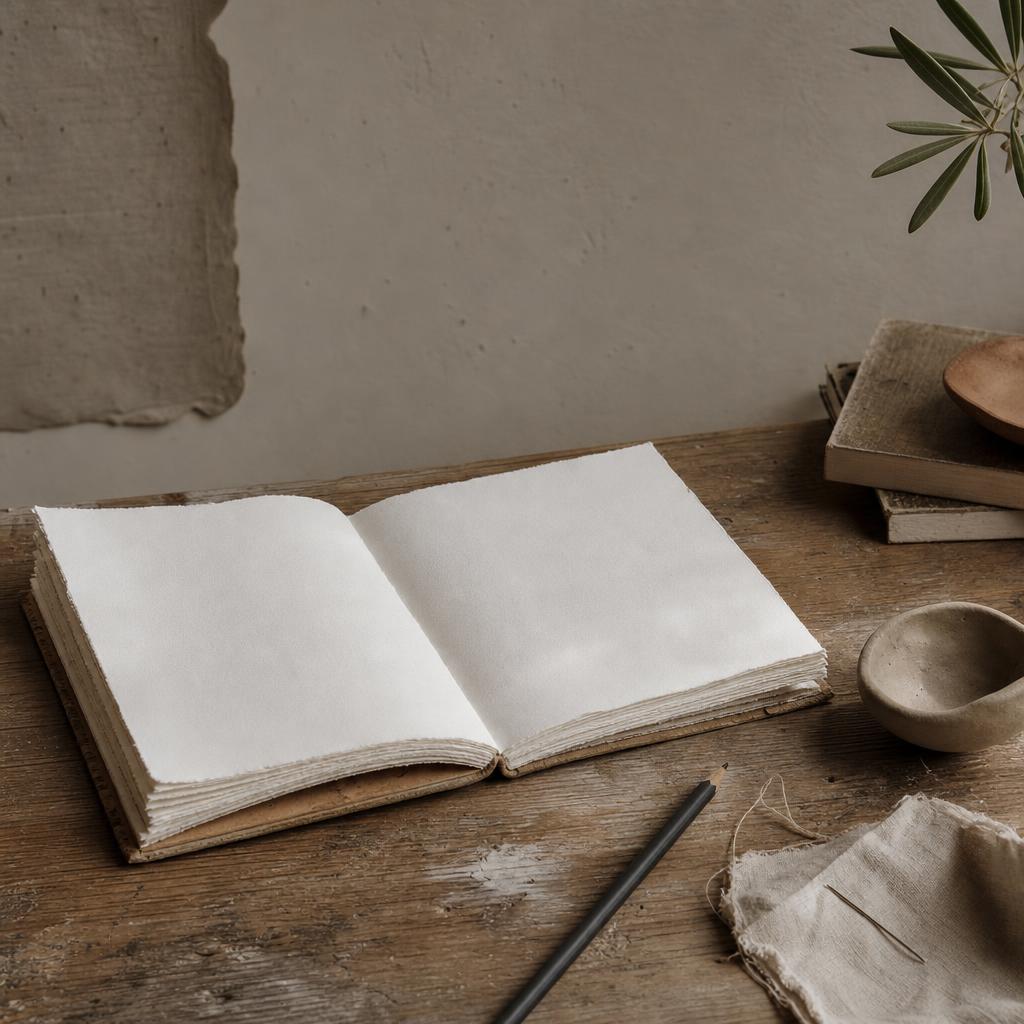
There is a particular satisfaction in an object that asks for your hands. A pen that leaves a mark. A book that falls open where you stopped. A mug that gets cold while you are talking. A jigsaw that stays unfinished on the table for a week.
These things are not remarkable because they are analogue. They are useful because they have edges. You can begin them, leave them, return to them. They do not keep refreshing themselves while you are away.
Hands give the mind somewhere to go
Writing a list by hand changes the pace of the list. You cannot rearrange it endlessly. You cross things out. You make the occasional mess. It becomes an object rather than an open loop.
The same is true of drawing, cooking, fixing, planting and making. Your attention is not being asked to travel very far. It is close to the surface, with something real to do.
A physical object can hold a pause
A book on a chair is a small reminder that you intended to read. A pack of cards on a table can turn into a conversation. A print on a wall can give a thought somewhere to stay without demanding anything from you.
The object is not the answer. It just makes the answer easier to remember.
Imperfect is part of the point
Hands-on things tend to show the working. The uneven line. The flour on the counter. The page with a corner folded over. This is not content. It is evidence that someone was here doing something without needing it to be polished first.
There is still a place for objects with weight, texture and a slightly inconvenient shape. They ask us to slow down just enough to notice we were moving too fast.
That is a useful thing for an ordinary object to do.
Keep reading.
All Notes
A less automatic evening: small ways to change the pace
A few low-effort ways to make an evening feel a little less automatic, with more room for attention, ordinary rituals and the people around you.
Read note
The lost art of doing one thing at a time
Doing one thing at a time is not a productivity trick. It is a way of being more available to the thing—and person—in front of you.
Read notea quieter note, once a week.
small ideas for being where you are. no noise. no hard sell.