A less automatic evening: small ways to change the pace
A few low-effort ways to make an evening feel a little less automatic, with more room for attention, ordinary rituals and the people around you.
By Present Tense. ·
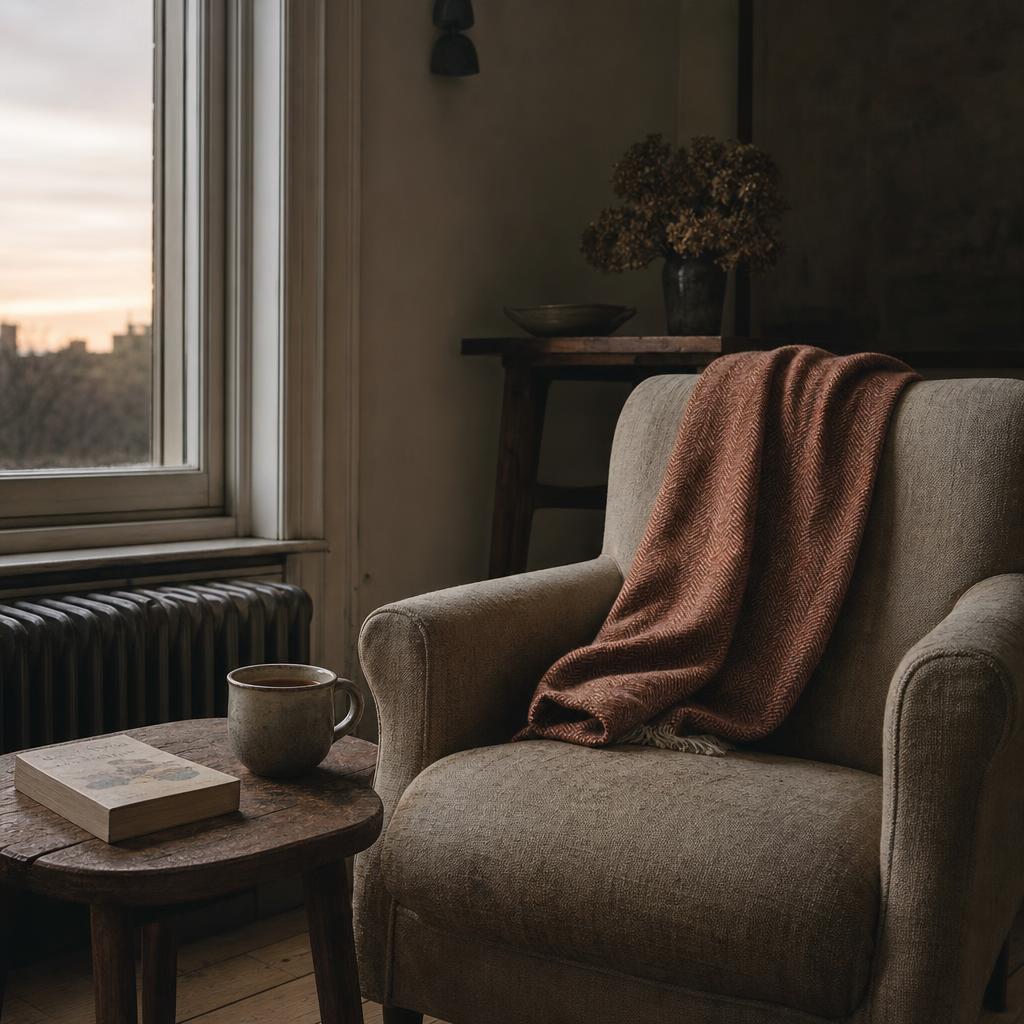
There is a moment in the evening when the day is technically over, but nothing has quite begun. You are home. You have sat down. Your phone is already in your hand.
This is not a case against the phone. It is useful, entertaining and sometimes exactly what is needed. It is just easy for it to become the first thing that happens, and then the rest of the evening follows behind it.
A less automatic evening does not need a colour-coded routine or a sudden interest in making sourdough. It can start with a small interruption: one thing that gives your attention somewhere else to go.
Make the first five minutes different
The first thing you do after arriving home tends to set the tone. Pick one ordinary action that creates a small gap before the scroll: put the kettle on, change into something comfortable, step outside for two minutes, wash a few things from the day away.
It is not about earning rest. It is about giving the evening a beginning of its own.
Put the phone somewhere mildly inconvenient
Not in another postcode. Just not in your hand. Leave it on a shelf while you make dinner. Put it on charge in the hall. Let it sit face down while you eat.
The point is not to prove that you can go without it. The point is to notice what else turns up when there is nothing immediately asking for your attention.
Choose one thing that has a proper shape
Read a few pages. Chop vegetables slowly. Listen to one side of an album. Water the plants. Make a list on paper. Draw badly. Call someone you have been meaning to call.
These things are not more worthy than a screen. They simply give the hands and the mind something to agree on for a while.
Make room for someone else
An evening can become less automatic the moment another person is properly included. Ask a question that does not have a one-word answer. Pull up a chair while dinner is cooking. Walk to the corner shop together. Sit in the same room without making a plan for it.
Connection rarely arrives as a big event. More often, it has to do with leaving a little unclaimed time on the table.
Stop while it is still good
You do not need to optimise every hour between work and sleep. A small change is enough. One cup of tea without a second screen. One conversation without checking the time. One thing done at the pace it actually takes.
That is not a perfect evening. It is an evening with a little more of you in it.
Keep reading.
All Notes
The lost art of doing one thing at a time
Doing one thing at a time is not a productivity trick. It is a way of being more available to the thing—and person—in front of you.
Read note
Small ways to make room for the people in front of you
Connection usually needs less grand planning and more small, generous pockets of time.
Read notea quieter note, once a week.
small ideas for being where you are. no noise. no hard sell.