The lost art of doing one thing at a time
Doing one thing at a time is not a productivity trick. It is a way of being more available to the thing—and person—in front of you.
By Present Tense. ·
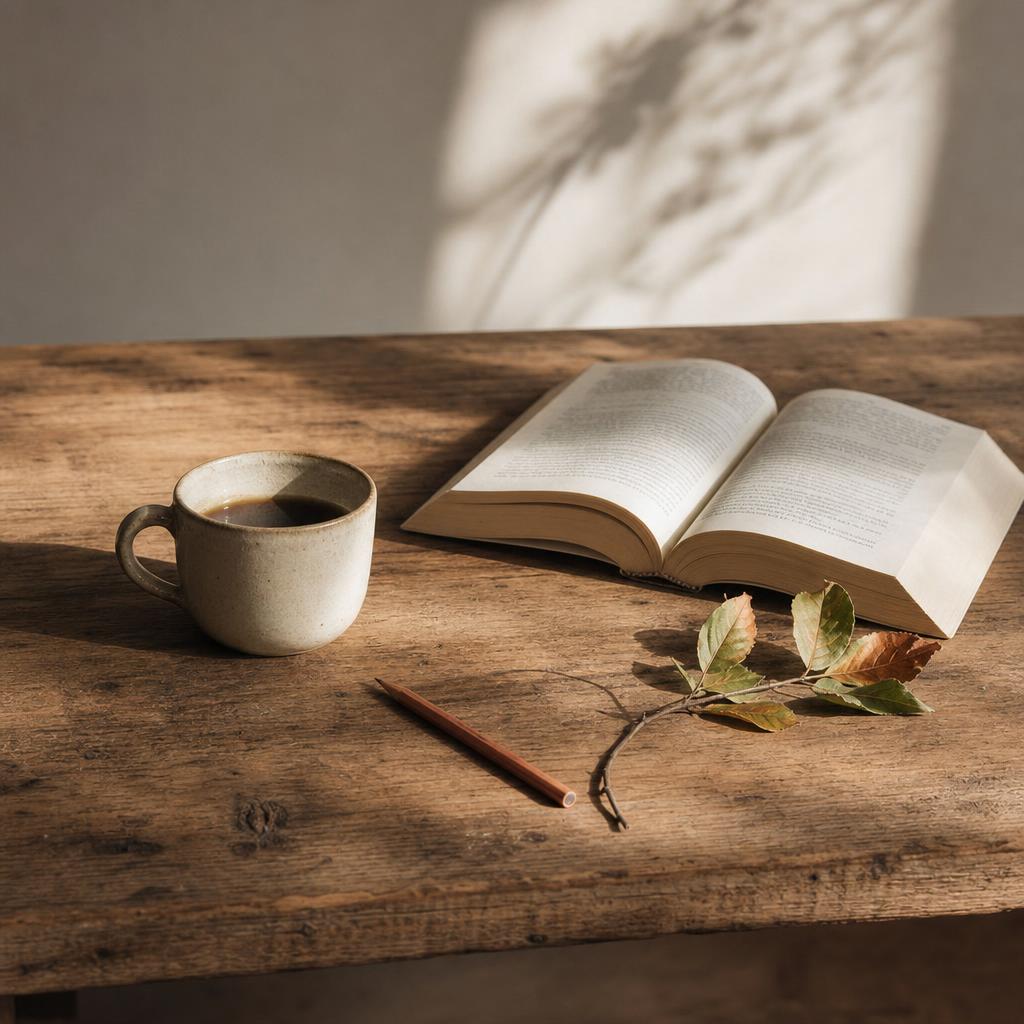
Most days require a certain amount of overlap. Lunch happens while messages arrive. A podcast fills the walk. The television is on while the washing is folded. None of this is a moral failure. It is simply the atmosphere we have learned to live in.
The trouble is not that we do several things. It is that we can forget what it feels like to do one thing properly.
Doing one thing at a time is not a productivity technique in a beige notebook. It is a small act of respect for whatever is in front of you.
Let one thing be enough for ten minutes
You do not need an entire unplugged weekend to practise attention. Ten minutes will do.
Make coffee without opening anything else. Walk without needing a soundtrack. Eat the first few bites of lunch before checking what has happened in the world. Pick a small task and let it occupy the whole frame for a while.
At first it can feel strangely empty. Then it starts to feel more like room.
Notice the urge to add something
The moment a kettle boils, a queue forms or a page ends, there is a familiar impulse to reach for another input. Usually the impulse passes quickly if it is not immediately obeyed.
That pause is useful. It shows how often we use extra noise to avoid an ordinary moment of waiting.
You do not have to make waiting meaningful. You can just let it be waiting.
Give conversations a clean surface
A conversation changes when neither person is half-looking somewhere else. You hear the detail that would otherwise go missing. You ask the next question. You leave a silence where the answer can arrive.
A phone on the table is not always a problem. But when it is face down and out of reach, it sends a quieter message: this can have my full attention for now.
Return, without making a fuss
Attention wanders. That is what attention does. The aim is not to become flawlessly focused. It is to notice when you have drifted and come back without turning it into a personal project.
One thing at a time. Then the next thing. Nothing dramatic. Just a little less divided.
Keep reading.
All Notes
A less automatic evening: small ways to change the pace
A few low-effort ways to make an evening feel a little less automatic, with more room for attention, ordinary rituals and the people around you.
Read note
Small ways to make room for the people in front of you
Connection usually needs less grand planning and more small, generous pockets of time.
Read notea quieter note, once a week.
small ideas for being where you are. no noise. no hard sell.