Small daily rituals for feeling more present
The first few sips. A familiar walk. A proper hello. Five ordinary moments to notice, without turning presence into another thing to get right.
By Present Tense. ·
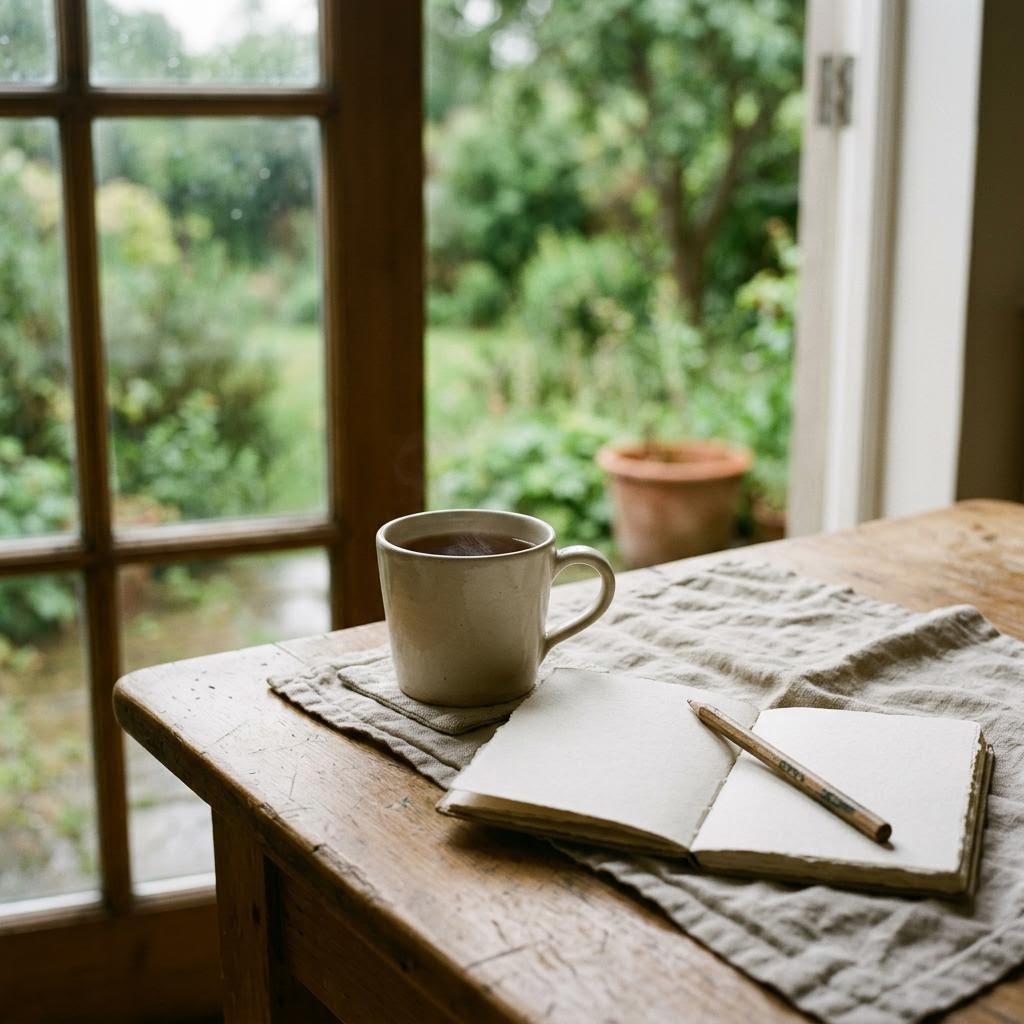
You do not need a quieter life before you can notice the one you have.
There will still be messages. The washing will still need doing. Some mornings will begin with a missing sock and a train you are already late for.
Being present is not a different kind of life, reserved for people with empty diaries. It can be a small change in how you meet the ordinary parts of yours: the first drink of the day, the walk you know by heart, the person who has just come into the room.
Not a perfect routine. A few moments you are actually there for.
What does feeling more present mean?
The NHS describes mindfulness as paying attention to what is happening inside and around us, moment by moment. That includes thoughts and feelings, but also the temperature of the air, the taste of lunch and the sounds outside a window.
It is not the same as having an empty mind. A thought about tomorrow can turn up while you are noticing today. You have not failed.
The following ideas are small ways to practise that kind of attention. They are not a tested five-step programme, and you do not need to do all of them.
1. Stay for the first few sips
Before the first coffee, tea or glass of water becomes something you carry between other tasks, give it a little attention.
Feel the cup in your hand. Notice its weight. Take a sip before opening the next thing. Is it hotter than you expected? Can you actually taste it?
You do not have to finish the whole drink in silence. You do not need a special mug, a clean kitchen or a morning without children. Just a few sips that are not happening entirely in the background.
If mornings are busy or drinks are not your thing, choose another moment. The useful ritual is the one that fits the day you really have.
2. Notice something on a familiar route
You may know the journey so well that you barely register it: the walk to the bus stop, the corridor to your desk, the short trip to the shop.
Choose one part to notice today. The sound under your shoes. A patch of light on the pavement. The colour of a front door you have passed a hundred times.
There is no need to turn the whole journey into an exercise. A short stretch is enough. If walking is not accessible to you, the same invitation works from a seat, a window or wherever you happen to be.
Keep your attention on traffic and anything else that needs it. Being present should not mean being less aware of what is around you.
3. Let an everyday task hold your attention
Washing your hands. Folding a T-shirt. Rinsing a bowl. Watering a plant.
Pick something you already do and notice what it feels like while you are doing it: the water, the fabric, the movement of your hands. Let it be the task, rather than the space between more important tasks.
There is no need to do it unusually slowly. And this is not an argument that the washing-up should become everyone's favourite part of the day.
It is simply a chance to notice a few seconds you might otherwise hurry straight through. Our note on why hands-on things still matter explores that a little further.
4. Give one person a proper hello
When someone arrives, look up if you can. Let the greeting finish before returning to the screen. Ask a question you have room to hear the answer to.
That person might be a partner, a colleague, a neighbour or someone you are calling. It does not have to become a long conversation. A brief exchange can still have your attention.
If today is a day on your own, you might send someone a message you mean, rather than one sent out of habit. You do not have to turn solitude into a problem to solve.
There is more on making time for good company if this is the moment you would like to make a little more room for.
5. Notice one thing before the day ends
Before moving into the last part of your evening, name one specific thing you noticed.
The bread was still warm. Someone made you laugh. The rain stopped just as you stepped outside.
You can write it down, say it to someone or leave it as a thought. This is not a demand to find a bright side to a difficult day. Something neutral counts too: the room was cool; the bus was quiet; the cup was blue.
The point is not to give the day a good score. It is to remember a little of what was actually in it.
Choose one cue, not a whole new routine
Try attaching one of these moments to something that already happens: after you put the kettle on, when you reach the front gate, before you close the curtains.
Habit research by Phillippa Lally and colleagues found that repeating an action in a consistent context could make it more automatic over time, with considerable variation between people. That study looked at eating, drinking and activity habits, not these presence exercises. It is a reason to try a familiar cue, not a promise of a wellbeing result.
You do not need a streak or a deadline. Miss a day and you can try again at the next ordinary opportunity.
A little more of the day
These moments will not make every day calm, and they are not a substitute for support when you need it. The NHS notes that mindfulness is not helpful for everyone and can make some people feel worse. If paying close attention to thoughts or sensations feels uncomfortable, stop or choose something else; speak to a qualified health professional if you need support.
You are allowed to keep this simple.
One drink you taste. One thing you notice. One person you make a little room for.
Be where you are. For a moment, anyway.
Sources and further reading
NHS: Mindfulness — guidance on everyday awareness, regular practice and why mindfulness is not right for everyone.
Lally and colleagues: How are habits formed? — research on repeating everyday behaviours in a consistent context, published in the European Journal of Social Psychology.
Keep reading.
All Notes
The hardest part is stopping.
You already know you're on your phone too much. The hard part is stopping. So we're making it simple: one pledge, take the pause.
Read note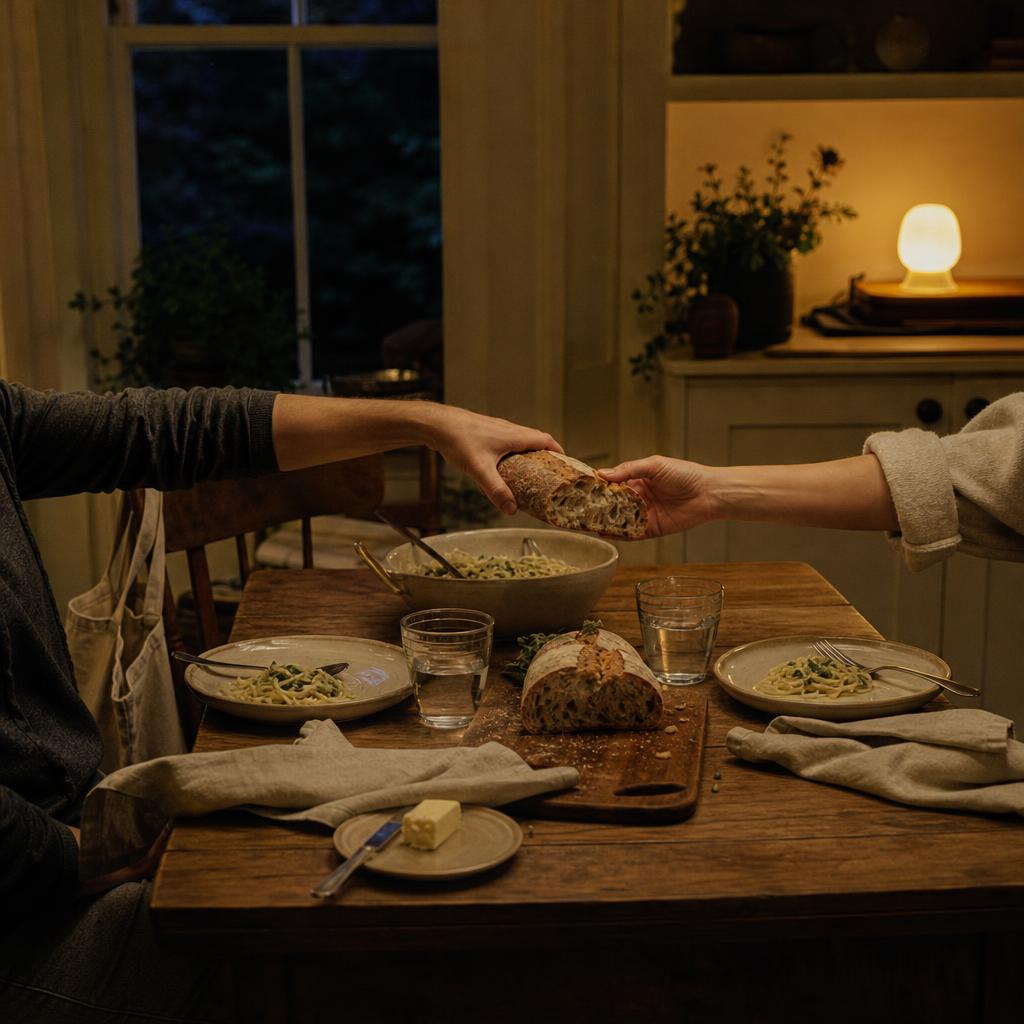
Make room for a phone-free evening
One meal. A cup of tea. A little more attention for the people you are with. A practical invitation to put phones aside, without making another rule for life.
Read notea quieter note, once a week.
small ideas for being where you are. no noise. no hard sell. subscribers get 10% off one order.